Macao Personal Tax Basics
Macao has its own tax-residence definition and generally territorial taxation. Work performed in Macao can attract professional tax even if paid abroad; residence does not automatically turn all foreign income into taxable personal income.
183 days or a qualifying habitual home at year-end
An individual is resident for the relevant calendar income year after at least 183 continuous or intermittent days in Macao, or with fewer days if a home available on 31 December shows an intention to maintain and occupy it as a habitual residence. A full or partial day counts. Article 24's residence rule took effect on 1 January 2025, ahead of the Code's general 2026 commencement.
Effective from
Territorial scope, subject to specific exceptions
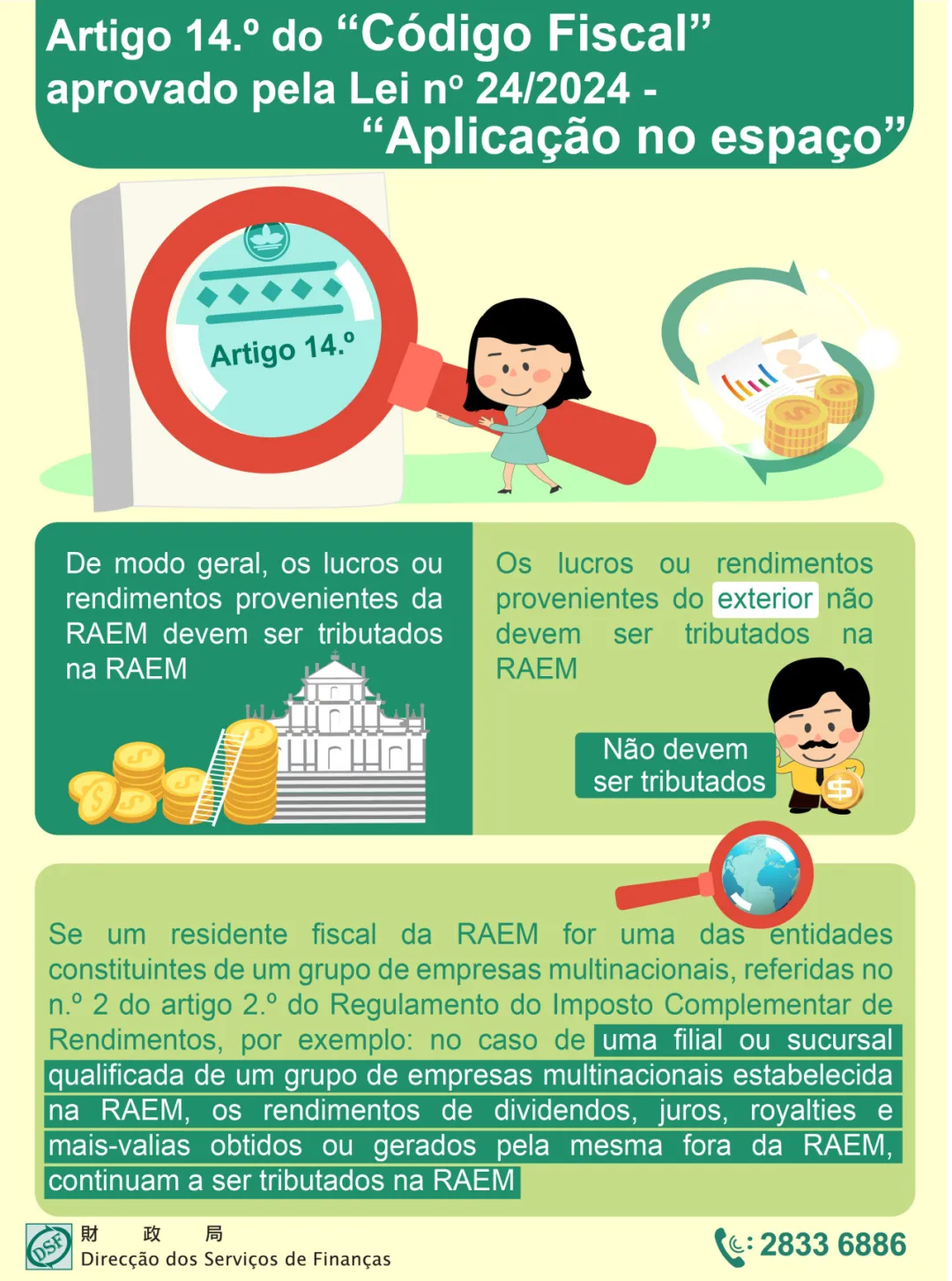
The Code generally applies to taxable events in Macao, subject to international or interregional agreements and contrary legal provisions. DSF explains that foreign-source income is generally outside that territorial rule. Its special foreign-passive-income exception concerns qualifying multinational-group entities, not a blanket worldwide charge on every individual resident.
Payment abroad does not remove local work income
Professional tax covers income from work carried out in Macao, in cash or kind, regardless of where payment originates or is made and regardless of currency. Foreign payroll is therefore not itself an exemption for work performed locally.
Employees and listed independent professions differ
DSF distinguishes employed workers from people independently exercising the listed liberal or technical professions. For employees, its guidance places registration, applicable withholding and periodic remittance duties on employers; it does not classify every independent business as the same professional-tax cohort.
Some absent taxpayers need a local tax representative
Natural-person taxpayers living outside Macao, and residents absent for more than 183 days in a calendar year, must generally appoint a representative habitually resident in Macao for tax rights and ancillary duties. The Code waives this appointment when the taxpayer opts for the electronic-notification system; this is distinct from the residence test.
Residence evidence and treaty relief are separate steps
DSF provides applications for declarations of tax residence and procedures under applicable double-taxation agreements, including mutual agreement requests where taxation is alleged to conflict with an agreement. A Macao identity document alone does not establish that a particular treaty benefit applies.
Scope and limitations
- Macao is assessed as its own tax jurisdiction here. Neither mainland China's individual-income-tax rules nor company-level foreign-passive-income exceptions are copied onto all Macao individuals.
- Professional tax is not the entire Macao tax system. Separate business, property, transaction and other obligations can apply; exemptions, source disputes and treaty entitlements require individual analysis.
- The Tax Code generally commenced on 1 January 2026, but its residence provision began on 1 January 2025. The two commencement dates must not be conflated.
Next review due . An official update can change these requirements sooner.
Official sources
- Law 24/2024 and the Tax CodeOfficial Gazette of the Macao SAR · Retrieved 2026-09-22 · PT
- Tax Code Article 14: territorial applicationMacao SAR Financial Services Bureau · Retrieved 2026-09-22 · PT
- Professional tax: scope and obligationsMacao SAR Financial Services Bureau · Retrieved 2026-09-22 · PT
- Avoidance of double taxation and residence proofMacao SAR Financial Services Bureau · Retrieved 2026-09-22 · EN